Racism is constant and through its consistency, many have made it their mission to show how racism can affect people not only in everyday life but also in extreme once in a lifetime situations. This can be seen explicitly through Richard Wright’s “Down by the Riverside” and Lorrain Hansberry’s A Raisin in the Sun which explores racism that occurs during a major flood, and when attempting to move up the economic ladder (respectively). And while the differing situations and time periods have a lot to do with the differences between the two mediums, the underlying difference between naturalism (Man(n) vs nature) and realism (a direct reflection of reality) are explicitly apparent. However, it is through these differences that make their messages more powerful as it shows its consistency across different genres. Overall, Richard Wright’s naturalistic work “Down by the Riverside” and Lorrain Hansberry’s realistic A Raisin in the Sun both do an amazing job exploring deliberate and underlying racism in their stories despite their different beliefs.
Richard Wright’s naturalistic “Down by the Riverside” does a good job of displaying how harmful racism could be in drastic situations. “Down by the Riverside” starts off on a horrid note with Mann, Lulu, Peewee, and Grannie being stranded in their house during a flood without any way to evacuate and get help. Their luck seems to shift for the better when Bob, a close friend, brings them a stolen boat so they can head to the Red cross hospital as Bob and sister Jeff head towards the hills. During the trek however, they come across the house of the man whose boat was stolen, he [Mr. Heartfield], before they can defend themselves, shoots while calling them slurs and being killed himself in the crossfire. When they reach the hospital, it is found that Lulu is already dead and Grannie and Peewee are taken to the hills while Mann is forced to go reinforce the levee. While there, the levee is flooded and Mann is finally taken to the hills and soon killed for his involvement in Mr. Heartfield’s death. This entire book has an underlying comparison of how black people vs. white people were affected by the flood. Initially, it’s who has the boats which are mainly white men and white soldiers then it’s who is given the chance to go to the hills vs. go to the levee, finally it’s who is listened to during Mann’s “trial” the white people or the black? This entire story has a goal to show to the audience that even in times of disaster, when collaboration and community should shine through, black people are still being oppressed not only by the situation but by the people who are supposed to help them. Overall, Richard Wright’s “Down by the Riverside” focuses the reader’s attention to the oppression that black people face especially in times of disaster.
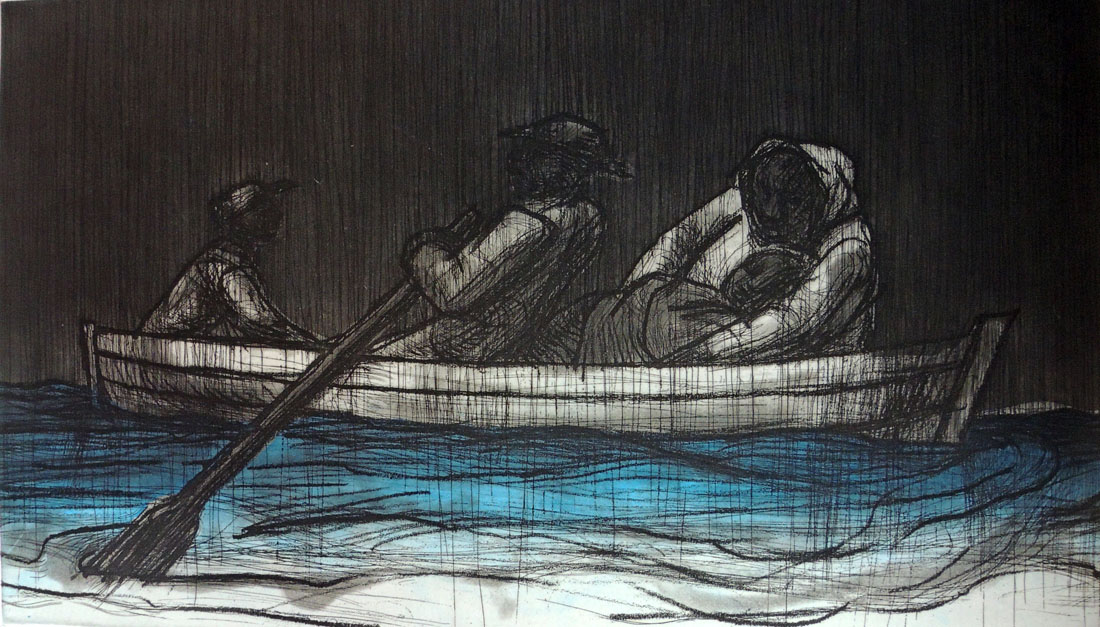 |
| John Wilson, Down by the Riverside, 2001, https://graphicarts.princeton.edu/2018/03/31/down-by-the-riverside/ |
Lorrain Hansberry’s A Raisin in the Sun demonstrates racism in an everyday setting, a direct contrast to “Down by the Riverside.” A Raisin in the Sun opens on a more domestic note by showing the Younger family, consisting of Ruth, Travis, Walter Lee, Beneatha, and the matriarch Lena on their everyday morning. Unlike “Down by the Riverside” where we are dropped into the story as the climax is approaching, in A Raisin in the Sun, we are simply dropped down to see the Younger family on a regular day in their lives. And it is because of this story’s normality that the issues they deal with regarding racism are more subdued but nonetheless impactful in their lives. The most shining example of this in the play is when the family tries to buy a house in a predominantly white neighborhood. During this time, the real estate agent [Mr. Linder] attempts to talk the family out of buying the house by bringing up how they wouldn’t belong and how it would be best for all parties involved if they simply gave up the house. And it is through this example do I find most comparable to the inequality that Mann went through in his story. These are the climaxes of the story and what the authors want to stick in their audiences' brains so they can realize the mistreatment not only they got through but what their community goes through. For example, Mann’s overall mistreatment in a time of disaster is supposed to enrage and rile up the audience and make them realize that even in life-or-death situations, white people will see you as a black man first and a person second. On the other hand, the mistreatment that the Younger family experiences is to educate and rile up the audience of the racism that is experienced all day every day and how the system prays on black families to keep itself running. Overall, the racist undertones in Lorrain Hansberry’s A Raisin in the Sun are a beautiful comparison and contrast to those in Richard Wright’s “Down by the Riverside” and it is through these mediums that audiences are educated and inspired to rise against the racist system that keeps them (black people) oppressed.
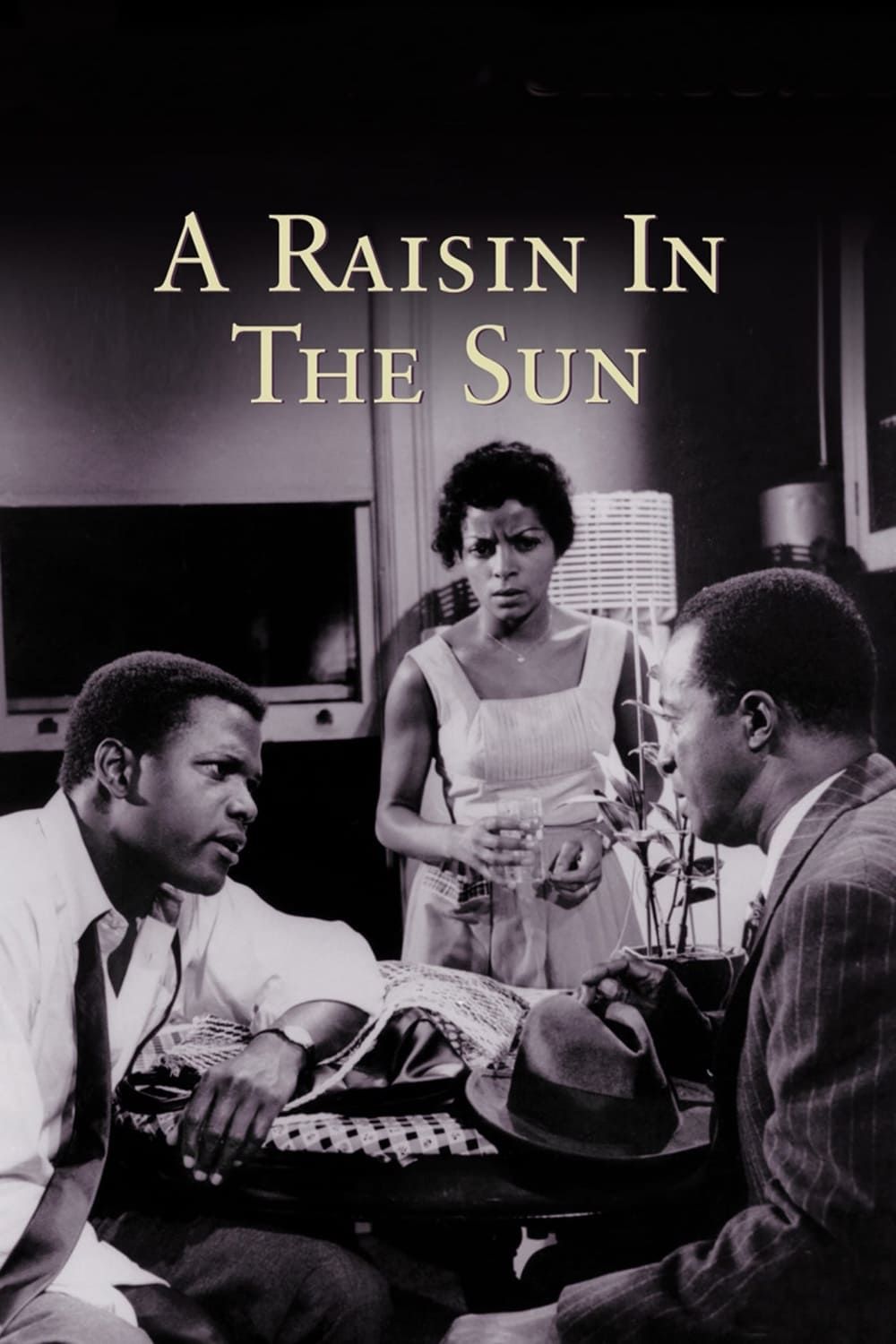 |
| A Raisin in the Sun, May 29th, 1961, Movie Poster, https://screenrant.com/db/movie/a-raisin-in-the-sun-1961/ |
Overall, the events in A Raisin in the Sun and “Down by the Riverside” are good examples of racism in different situations, allowing the audience to have a jumping point in discussion about racism. Oftentimes, when talking of casual and extreme racism, it is easy for people to deploy plausible deniability claiming that a situation is too unlikely to happen even if it is possible. With these two stories, although fictional, many aspects are rooted in real life situations that are undeniably affected by racism and common. With the blatant inequality displayed in the stories it gives an undeniably realistic example of what could happen (and what has been happening) if racism is left unchecked. These stories were created to elicit unfairness and rage in their audiences so they can feel compelled to fight against the everyday struggles and what could possibly happen to those that just so happened to be in a disaster and of color. These stories, with their naturalistic and realistic undertones, do an amazing job at promoting discussion and causing the audience to feel uncomfortable enough with racism that they’re willing to fight against it.


